
Mayfair sits at the centre of London but works differently street by street. Compare its homes, shopping, garden squares and travel before choosing.
Mayfair is a central Westminster neighbourhood whose daily life is shaped by streets, squares, homes, offices and cultural institutions in close proximity. It is easy to recognise the name without understanding how an individual address will feel. The useful way to assess the area is to walk the streets around a potential home and see how the routes, shared spaces and local facilities fit the routine you expect to have.
What is Mayfair like to live in?
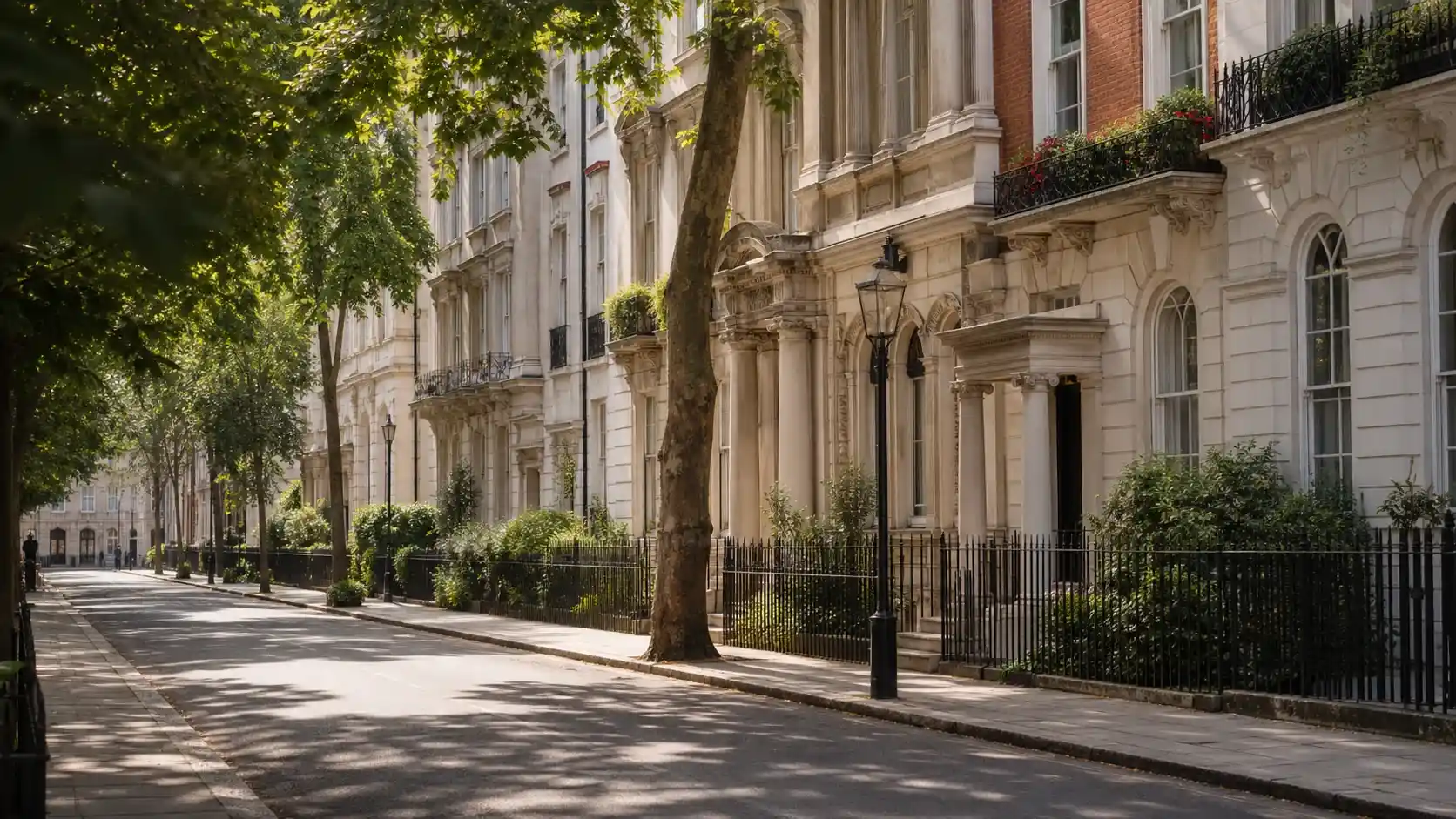
Mayfair has a formal street pattern, established squares and a mix of residential and commercial uses. Westminster’s conservation material records the area as a distinct conservation area with its own map and guidance. That historic setting gives the neighbourhood a strong physical identity, but it does not make every building the same or determine how a particular home is managed.
Some addresses sit close to the busiest central routes, while others feel more enclosed by smaller streets or garden squares. When viewing a property, allow time to walk out in more than one direction. It will show you whether the immediate setting works for your everyday needs better than a general description ever could.
Mayfair’s squares and nearby green space
The neighbourhood’s squares and formal streets are part of its character. They provide visual structure and short walking routes through an otherwise dense part of central London. Nearby Royal Parks offer a larger green-space option, but the relevant entrance and route will depend on where you live.
Use the Royal Parks live information when you are planning a visit or regular route. Park arrangements and events can change, so an evergreen guide should not try to predict them. Instead, check the journey from the exact property and decide whether the walk works as part of your normal week.
Culture, shopping and everyday routines in Mayfair
Mayfair has galleries, shops, hospitality and cultural activity, but a useful local routine is more modest than a guidebook itinerary. Look for the practical places you will return to: somewhere to buy essentials, a route for a regular appointment, a café or meeting point, and the services you need nearby.
The Royal Academy of Arts is one established cultural institution close to the area. Its programme changes, so use its current site if it matters to you rather than treating a past exhibition as a permanent feature. The same principle applies to retail and hospitality: the address and your habits matter more than a volatile list of names.
Getting around from Mayfair
Central location creates options, not one universal journey. The best route depends on the property, where you are going and the time you travel. Enter the full address into the TfL journey planner to compare walking, public transport and access requirements.
Testing a real journey helps you understand the area in practical terms. It can also reveal whether you prefer a different route in the morning, after dark or when carrying shopping. Avoid fixed commute claims: they quickly become inaccurate and rarely fit every household.
Mayfair homes, from townhouses to converted flats
Westminster publishes Mayfair conservation-area maps and guidance. These documents help explain the area’s historic streets and building context, but they are not a substitute for checking an individual home. A townhouse, a converted flat and a managed apartment can differ in entrances, lifts, storage and shared-space rules.
If you are considering future alterations, consult current council advice and the appropriate professional. For everyday living, focus first on the home as it stands: the rooms, natural light, storage and routes in and out. That gives you a clearer basis for deciding whether the property fits your household.
Plan the practical side of moving to Mayfair
Once you have chosen a home, a removals survey should establish the property-specific access, inventory and likely date. Ask the managing agent or concierge about lift bookings, shared-area protection, loading arrangements and any moving window. Check current Westminster requirements for the exact street rather than assuming the conservation setting changes an ordinary removal.
For local service context, see removals in Mayfair, Marylebone and Soho. A packing service can be planned around fragile or time-sensitive rooms, and household storage may help only when a date gap or temporary clearance calls for it. A house removals service should reflect the real property and access, with a clear fixed quote.
Explore Mayfair as you would live in it, then plan the move around the exact home you have selected.